
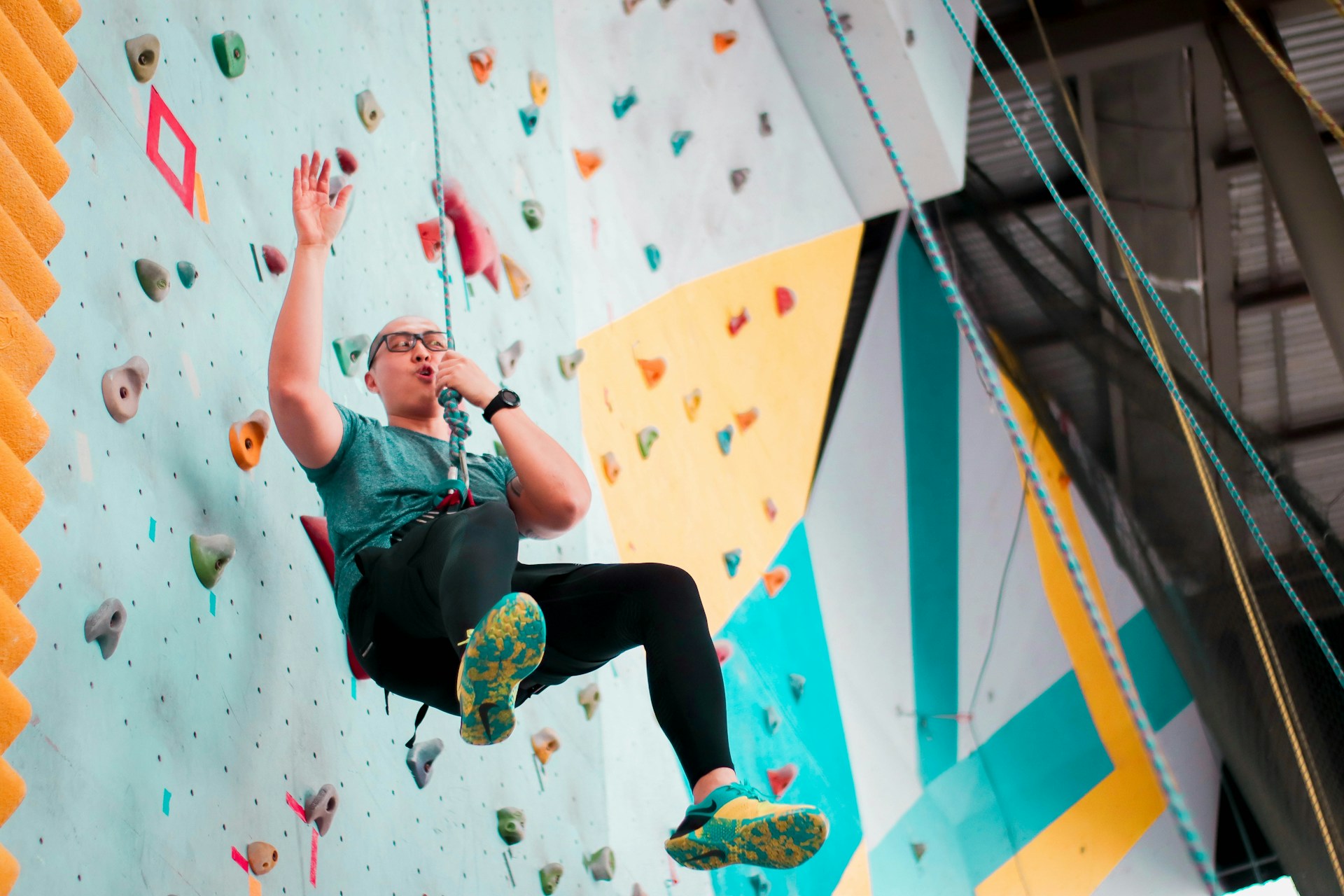
You pull onto a route feeling strong and confident—only to feel your forearms slowly tighten as you approach the final moves. Sound familiar? For many climbers, endurance—not strength—is the biggest barrier to finishing longer routes.
Endurance allows you to keep moving efficiently under fatigue, recover on the wall, and maintain good technique even when you’re tired. The good news is that endurance can be trained, improved, and maintained with the right approach.
Climbing endurance isn’t just about lasting longer—it’s about managing effort. True endurance combines physical stamina, efficient movement, and mental focus.
There are two main types of climbing endurance:
Both play a role in extended climbs, especially on long top rope and lead routes.
One of the most overlooked aspects of endurance is efficiency. Climbers who move smoothly, use their feet well, and rest effectively last longer than those who rely on brute strength.
Focus on:
Small changes in movement can dramatically increase how long you can stay on the wall.
Resting is a skill. Good climbers know how to identify rest positions and use them to recover before pushing on.
Effective resting techniques include:
Even brief rests can restore energy if used correctly.
Endurance improves with consistent, structured practice. Try incorporating the following into your sessions:
Linked Routes
Climb two or more routes back-to-back without resting.
Timed Intervals
Climb continuously for a set amount of time, focusing on steady movement.
ARC Training
Low-intensity, continuous climbing that builds aerobic capacity without heavy fatigue.
Endurance gains happen during recovery, not just training. Overtraining leads to fatigue and stagnation.
Make sure to:
Consistency matters more than intensity.
Extended climbs test your focus as much as your muscles. Learning to stay calm under fatigue helps prevent rushed or sloppy movements. Break long routes into sections and focus on one sequence at a time. Staying present keeps your energy and confidence intact.
Enhancing endurance isn’t about suffering through climbs—it’s about learning to move efficiently, rest strategically, and train with intention. With patience and consistent practice, longer routes will start to feel more manageable and more enjoyable.
Training tips, technique breakdowns, community stories, and gym updates — all in one place.
.jpg)

.jpg)